Source electric sightseeing wedding carriage for weddings, parties, and sightseeing
Compare 20 electric sightseeing wedding carriage options featuring custom colors, solid rubber tires, and CE certification. Buyers can evaluate models with varying dimensions, seating capacities, and power specifications for weddings, parties, and scenic tourism.
Key considerations
Products List


Comprehensive Sourcing Guide
Strategic Sourcing Guide for Electric Sightseeing and Wedding Carriages
Understanding the Product Category and Core Specifications
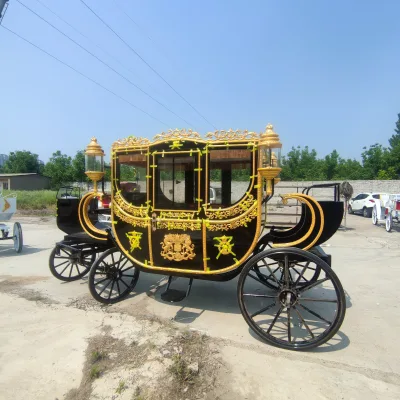
The market for electric sightseeing and wedding carriages represents a specialized intersection of traditional aesthetics and modern propulsion technology. Buyers entering this sector must first distinguish between purely decorative, horse-drawn replicas and functional, electric-assist vehicles designed for commercial or event use. Based on available product data, the category encompasses models such as the "Victoria Carriage," "English Style Horse Carriage," and "Electric Assist Horse Carriage," each serving distinct operational needs. The fundamental design philosophy often revolves around an "Open" body type, which facilitates visibility for passengers during scenic tours or wedding processions.
Technical specifications vary significantly across the inventory, requiring precise verification before procurement. A critical observation from the current market data is the variation in physical dimensions. For instance, specific models like the HYS-SC45 and HYS-SC42 share a length of 3.6 meters, while the HYS-RC08 extends to 4.1 meters. Widths generally cluster around 1.65 to 1.8 meters, and heights range from 1.9 to 2.4 meters. Buyers must treat these figures as specific to individual model numbers rather than universal standards for the entire category. When sourcing, the procurement team should verify the exact length, width, and height (LWH) against the intended venue constraints, such as narrow historic streets or standard gate clearances.
The propulsion systems for these vehicles also display notable diversity. Some units are explicitly defined as "Electric Assist Horse Carriages" or "Electric Horseless Carriages," featuring power outputs exceeding 2000W and operating on 60V voltage systems. This distinguishes them from traditional horse-drawn vehicles, offering a cleaner, quieter alternative suitable for urban environments and indoor exhibition spaces. The tire composition is another vital technical differentiator; the data indicates a prevalence of "Solid Rubber Tires" or "Solid Natural Rubber" options. These solid tires are advantageous for sightseeing applications as they eliminate the risk of punctures, ensuring reliability during long-duration events. However, buyers should confirm whether the solid tires are standard or if "as Required" customizations are available for specific terrain types.
Compliance, Certification, and Safety Standards
Navigating the regulatory landscape for electric vehicles is a paramount concern for B2B buyers. While the specific regulatory environment depends on the destination country, the presence of international certifications provides a baseline for quality and safety. The supplied product data explicitly references "CE" certification and "CE Approved" status for several models, including the HYS-SC57 and HYS-RC08. The CE mark indicates conformity with health, safety, and environmental protection standards for products sold within the European Economic Area. Buyers should treat this as a strong indicator of manufacturing rigor but must verify that the specific unit they purchase carries the valid documentation for their local jurisdiction.
Beyond general electrical safety, emission standards are a relevant consideration for electric vehicles, particularly those marketed for urban sightseeing. One data point references an "Emission Standard: Euro 1." While electric vehicles do not produce tailpipe emissions in the traditional sense, this reference likely pertains to the regulatory framework the manufacturer adheres to regarding noise pollution or the classification of the vehicle within the broader transport sector. Procurement teams should request the specific test reports that validate these claims to ensure the vehicle meets local environmental regulations.
Material composition also plays a role in compliance and durability. The use of "Galvanized Steel" for the body structure is a significant positive attribute, as it offers resistance to corrosion and rust, which is essential for vehicles exposed to outdoor elements during weddings or year-round sightseeing tours. Buyers should verify that the galvanization process meets industry standards for longevity, ensuring the structural integrity of the carriage remains intact over years of operation. Additionally, the "Condition: New" status of the listed items confirms that the supply chain focuses on fresh manufacturing rather than refurbished units, which is critical for warranty and insurance purposes.
Cost Drivers and Pricing Dynamics
The pricing structure for electric sightseeing and wedding carriages is influenced by a complex array of factors, including customization levels, propulsion technology, and material quality. The observed price range in the market spans from $100 to $7,580 USD. This wide disparity suggests that the category includes both simple, non-motorized decorative replicas and fully equipped, high-performance electric vehicles. The lower end of the spectrum likely corresponds to basic models or those with minimal electrical components, while the upper end reflects units with advanced battery systems, custom branding, and premium finishes.
A primary cost driver is the level of customization. The data indicates that "Customization: Available" is a standard feature across the category. Buyers can often select colors such as "Blue," "Brown," "White," "Pink," or request fully "Customized" palettes to match specific event themes. Custom paint jobs, specialized upholstery, and unique body modifications will inevitably increase the unit cost. Furthermore, the seating configuration impacts pricing; models with "Leather" seats and capacities ranging from 2 to 6 persons command different price points compared to basic bench seating.
The packaging and shipping logistics also contribute to the total cost of ownership. Products are typically packed in "Iron Shelf and Plywood" or "as Required" configurations. This robust packaging is necessary to protect the delicate aesthetic details and mechanical components during transit, particularly for international shipments via "Sea" freight. Buyers should factor in the potential for higher shipping costs due to the large dimensions of these vehicles, which often exceed standard container dimensions and may require specialized freight arrangements. The origin of the products, identified as "Henan," provides context for manufacturing costs but does not guarantee a specific price point without current market negotiation.
Typical Applications and Operational Scenarios
The versatility of electric sightseeing and wedding carriages allows them to serve multiple high-value applications. The primary use cases identified in the market data include "Wedding," "Sightseeing," "Exhibition," and "Party" events. In the wedding sector, these carriages are frequently utilized as "Romantic Horse Chariots" or "White Wedding Pumpkin Horse Carriages." The aesthetic appeal, combined with the silent operation of electric motors, makes them ideal for processions in historic districts, golf courses, or resort venues where traditional horses might be restricted or impractical.
For sightseeing tourism, the vehicles function as "Sightseeing Carriages" that navigate scenic spots and tourist attractions. The "Adjustable Speed" feature noted in the product specifications is particularly valuable here, allowing operators to control the pace of the tour to match the group's walking speed or to ensure safety in crowded areas. The "Open" body type enhances the tourist experience by providing unobstructed views of the surroundings, a key selling point for photography and sightseeing packages.
Exhibitions and trade shows also represent a significant application area. The "Electric Horseless Carriage" designation highlights their suitability for indoor or semi-indoor environments where noise and exhaust fumes are prohibited. These units can be used as mobile displays or as part of a themed attraction at corporate events. The ability to customize the color to "Pink" or other brand-specific hues allows companies to integrate the carriage seamlessly into their marketing campaigns. The "Seat Capacity" of 2 to 6 persons ensures flexibility for small family tours or larger group excursions, making the vehicle adaptable to various operational scales.
Supplier Evaluation and Verification Protocols
When evaluating potential suppliers for electric carriages, buyers must adopt a rigorous verification process that goes beyond the initial product listing. The origin of the products is listed as "Henan," a region known for manufacturing, but this geographic marker alone does not define the quality of the supplier. Buyers should prioritize suppliers who can provide detailed technical documentation, including wiring diagrams, battery specifications, and structural integrity reports. The presence of a "CE" certification is a positive signal, but it must be accompanied by a valid certificate number that can be cross-referenced with the issuing body.
The Minimum Order Quantity (MOQ) observed in the market is consistently "1," which indicates a high degree of flexibility for buyers. This low barrier to entry allows for the procurement of single units for testing or small-scale events without the need for large inventory commitments. However, buyers should be cautious of suppliers who offer an MOQ of 1 but lack the capacity to support bulk orders or provide consistent quality control for larger batches.
A critical aspect of supplier evaluation is the assessment of their customization capabilities. Since "Customization: Available" is a core attribute, the supplier must demonstrate a proven track record of executing custom orders. Buyers should request examples of previous work, such as custom-colored carriages or modified seating arrangements, to verify the supplier's craftsmanship. Additionally, the "Shipping Way: by Sea" suggests that the supplier has experience with international logistics. Buyers should inquire about the supplier's experience with export documentation, customs clearance, and the handling of oversized cargo to ensure a smooth delivery process.
Quality Control and Long-Term Procurement Considerations
Ensuring the long-term reliability of electric sightseeing carriages requires a proactive approach to quality control. The "Condition: New" status is a baseline expectation, but buyers must verify the manufacturing date and storage conditions of the units. Components such as the "Solid Rubber Tires" and the "Galvanized Steel" body should be inspected for signs of degradation or damage prior to shipment. The "Iron Shelf and Plywood" packing method is a strong indicator of care in transit, but buyers should still conduct a thorough inspection upon receipt to ensure no structural damage occurred during shipping.
Battery life and maintenance are critical long-term considerations for electric models. With power outputs exceeding 2000W and 60V systems, the battery technology used is a determining factor in the vehicle's operational lifespan. Buyers should request detailed information regarding the battery type, expected cycle life, and replacement costs. Since the "Voltage" is specified as 60V, compatibility with local charging infrastructure must be confirmed to avoid operational disruptions.
For procurement teams planning for the future, the "Adjustable Speed" and "Customized" color options offer a degree of future-proofing. As event trends evolve, the ability to reconfigure the vehicle or update its aesthetic appeal without purchasing a new unit adds significant value. Buyers should also consider the availability of spare parts, particularly for the "Solid Tires" and electrical components. A supplier that maintains a robust inventory of spare parts and offers technical support will be more valuable in the long run than one that only sells the initial unit.
Comparative Analysis of Key Model Specifications
To assist in the decision-making process, the following table summarizes the key specifications of the models observed in the market data. This comparison highlights the variations in dimensions, power, and features that buyers should consider when selecting the right unit for their specific needs.
| Model Number | Standard Dimensions (LWH) | Power Output | Voltage | Tire Type | Color Options | Key Application |
|---|---|---|---|---|---|---|
| HYS-SC45 | 3.6m * 1.65m * 2m | Not Specified | Not Specified | Solid Rubber | Blue, Brown, Custom | Wedding, Exhibition |
| HYS-SC57 | 3.6m * 1.6m * 1.9m | Not Specified | Not Specified | Solid Rubber | Black, Custom | Wedding, Party |
| SC60 | 3.1m * 1.7m * 2.1m | >2000W | 60V | Solid Natural Rubber | Not Specified | Sightseeing |
| HYS-SC42 | 3.6m * 1.65m * 2.1m | Not Specified | Not Specified | Solid Tires | Pink, Optional | Wedding, Exhibition |
| HYS-RC08 | 4.1m * 1.7m * 2.4m | Not Specified | Not Specified | Solid Rubber Tires | Not Specified | Wedding, Sightseeing |
| PC14 | 3.7m * 1.8m * 2.25m | Not Specified | Not Specified | Not Specified | Not Specified | Sightseeing Tourism |
This table underscores the importance of matching the vehicle's physical dimensions and power requirements to the specific operational environment. For instance, the SC60 model stands out with its explicit >2000W power rating and 60V system, making it a strong candidate for high-demand sightseeing routes. Conversely, the HYS-RC08 offers the largest footprint, suitable for events requiring a grander presence. Buyers must carefully weigh these specifications against their budget and venue constraints to make an informed procurement decision.
FAQs
What customization options are available for these carriages?
Customization is available for color and design specifications. Buyers can select from Blue, Brown, White, or Pink, or request fully customized palettes to match specific event themes or brand identities.
Which certifications do the electric models hold?
Several models hold CE certification and are marked as CE Approved. This indicates conformity with health, safety, and environmental protection standards for products sold within the European Economic Area.
Can these carriages be used for exhibitions and parties?
Yes, these carriages are suitable for weddings, sightseeing, exhibitions, and parties. Their electric operation makes them ideal for indoor or urban environments where traditional horses are restricted or impractical.
What is the typical seating capacity for these vehicles?
The seat capacity ranges from 2 to 6 persons depending on the specific model. Some units feature leather seats, offering a premium experience for small family tours or larger group excursions.
How are these carriages packaged for international shipping?
Products are typically packed in iron shelves and plywood or as required by the buyer. This robust packaging protects delicate aesthetic details and mechanical components during transit via sea freight.
What power specifications do the electric assist models have?
Electric assist models feature power outputs exceeding 2000W and operate on 60V voltage systems. These specifications ensure reliable performance for sightseeing applications and wedding processions without noise or exhaust fumes.
Are solid rubber tires standard on these carriages?
Many models come equipped with solid rubber tires or solid natural rubber options. These tires eliminate the risk of punctures, ensuring reliability during long-duration events on various terrains.